
The Foundling
Native stereo drama for RSA Films and Philips; Best 3D Short.

What we do · 03
Shooting what others cannot: native stereo, natural history, macro and high speed.
Native stereo 3D production: shooting stereo on location and in the studio, natural history, macro and high speed, with rigs built for the shot and crews small enough to travel.
Who this is for
Directors, DoPs and factual commissioners who need a stereo capture unit that will hold up in the field and on a set.
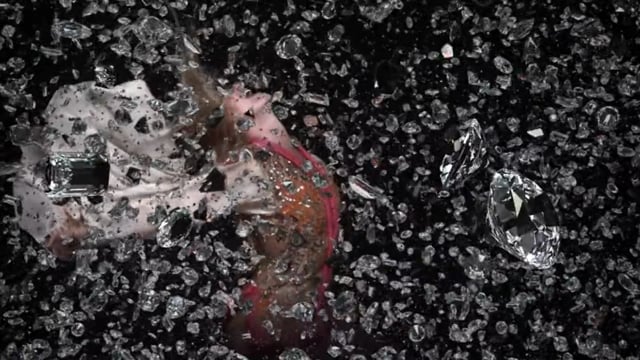
If a production is shooting natively rather than looking to conversion in post, then a single rig or camera solution will rarely satisfy a whole shoot. A bird in flight in a Borneo jungle. Riders passing at two hundred miles an hour on the Isle of Man. Kate Moss at a thousand frames a second. This is native stereo, shot on location or in the studio by people who have done it for thirty years.
The natural history work is the hardest version of the problem. The rig has to be small enough to travel, quick enough to react to an animal, and reliable enough to survive a six-month shoot with nobody to call. Flying Monsters, Penguins 3D, Natural History Museum Alive and Conquest of the Skies, all with David Attenborough, took five major natural history awards between them. Stereo separates a cluttered scene front to back, so an animal that is lost in the frame in 2D reads clearly. That is what makes it worth carrying.
In the studio and on location the same team has shot commercials for Sony, Philips and Microsoft, drama for the BBC and RSA Films, a native stereo feature for Warner Bros, the 2012 Olympic idents for the BBC and Kate Moss for AnOther Magazine on Phantom cameras. The Foundling won the Lumiere for Best 3D Short. TT3D was a UK independent documentary with no second takes and a theatrical release which included run-and-gun style shooting to capture the story.
We also shoot for headsets. My Africa was captured in stereo 360 in Kenya with bespoke rigs for the shots the standard cameras could not take, and the Jaunt productions for the Royal Opera House, Manchester City, Land Rover BAR and Virgin Media put 360 rigs backstage, pitchside and on the water.
The unit can be two people or a full stereo department inside a larger crew. Either way the team responsible for designing the 3D on the shoot is the same that will be in the depth grade later, and that continuity is the point.
How we work
Beam-splitter, side-by-side, single-body or something we build. The choice follows the shot, style of shooting, the lens and how far the crew has to carry it.
Penguins 3D was shot over six months on a South Atlantic island reached by small boat, with a crew of three keeping native stereo rigs running. The footprint is part of the design.
Interaxial, convergence and the design of the frame establish the depth. Faces keep their roundness; the background keeps its distance.
Stereo monitoring, playback and dailies you can judge on the day, so a problem in the rig is found on set and not in the edit.
In their words
Proving projects
Native stereo drama for RSA Films and Philips; Best 3D Short.

Native stereo for the BBC's London 2012 coverage; Best 3D Commercial.

Kate Moss shot in stereo for AnOther Magazine.

Stereo 360 shot on location in northern Kenya with a small crew.

Native stereo natural history in the South Atlantic.

Native stereo at the Isle of Man TT, bikes and riders' faces alike.
Also in this thread: Ocean Keepers, Invisible Ocean, Recharge in Nature, My Africa: Elephant Keeper, Royal Opera House - Join The Chorus, Land Rover: Above and Beyond, Manchester City - Match Day, Virgin Media: Vivid House Party, One More Time With Feeling, David Attenborough's Natural History Museum Alive, Inside the Mind of Leonardo, Jack the Giant Slayer, Mr Stink, Horrid Henry, Magic Silver II, Pirates of the Caribbean: On Stranger Tides, Sony: MultiStory, Microsoft Office, New Meta Immersive Project (in post production).
On camera
 3:21
project film
The film, flat.