
My Africa: Elephant Keeper
Interactive VR companion to My Africa, shown at Tribeca.

What we do · 04
Social VR, AR and installation pieces for venues, festivals and museums.
Location-based experience production: original VR, AR and installation pieces designed for a room, a throughput and months of operation.
Who this is for
Venues, festivals, NGOs, platforms and brands commissioning a flagship immersive experience rather than a piece of 360 content.
A location based experience is judged in a room, by people who did not choose to be experts. It has to work for multiple strangers at once, run all day and still mean something. That is a different brief from a headset film, and it is the work we have originated ourselves rather than waited to be asked for.
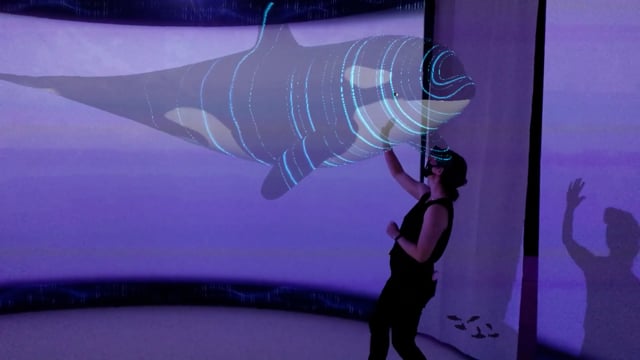
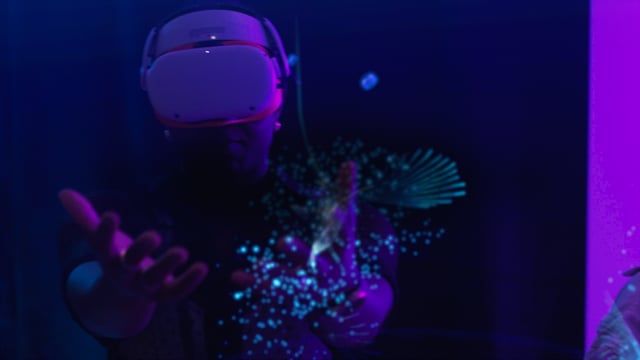
With Conservation International we made four pieces in four years and all four were selected for Tribeca. My Africa is a 360 film narrated by Lupita Nyong'o. My Africa: Elephant Keeper put the audience in the Reteti sanctuary feeding an orphaned elephant with real props and no controllers. Drop in the Ocean shrinks up to four participants to two inches tall and lets them ride a jellyfish through a plastic-filled sea, moving freely and seeing each other, with a body-tracking system built for it. Critical Distance put audiences among the Southern Resident orcas on HoloLens 2, seeing echolocation as sound in space.
Each one used a different technology because each idea needed one. The constant is the model: originate the concept, find the partner whose cause it serves, develop the technology, deliver the experience and stand in the venue while it runs.
The same capability has served brands and arts organisations. Song of the Sea took Cartoon Saloon's hand-drawn feature into interactive VR for Oculus and won the Lumiere for Best Interactive VR. Land Rover: Above and Beyond won the Campaign Tech Award for Best Use of VR. The Royal Opera House, English National Ballet and Manchester City have each had audiences put somewhere they could not otherwise stand.
Domes and large-format venues are the next room. The stereo and immersive craft transfers; the throughput and the operation are what we design for.
How we work
We originate or co-originate the idea with the partner, and we say early if a format will not carry it. Drop in the Ocean began with a photographic archive and a question about scale.
Stereo and 360 capture where the piece needs the real world; Unity or engine build where it needs a world of its own; often both.
Body tracking with Target 3D, HoloLens 2 with Microsoft, installation design with Thinc. We commission what we do not build and we stay responsible for the result.
Designed for a room, a throughput and months of operation by staff who are not technologists. Props instead of controllers where that removes the technology from the audience's hands.
In their words
Proving projects
Interactive VR companion to My Africa, shown at Tribeca.

Tribeca selection and festival and venue screenings worldwide.

Social VR about the Southern Resident orcas; Tribeca 2020.

Interactive VR for Oculus with Cartoon Saloon; Best Interactive VR.

An exhibition of four shared experiences, modular and built to tour, run by the venue's own staff.

Four-person free-movement social VR built on Peter Parks's archive; Tribeca 2019.
On camera
 2:0
interview
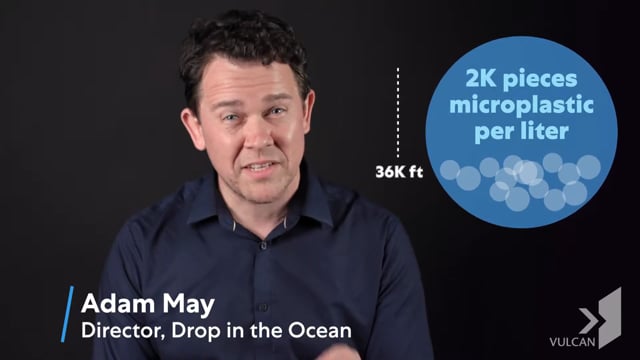
Adam May
Two thousand pieces of microplastic per litre: Adam on the number behind Drop in the Ocean.
 2:7
project film
The piece in two minutes.
 1:0
trailer
The exhibition at the Wales Millennium Centre, filmed by Ian Smith.