 15:47
interview
Adam May on the Advanced Imaging Society’s The Close-Up
Adam May, Jim Chabin
Jim Chabin asks Adam about In the Heart of the Sea, and about Pan, Gravity and Edge of Tomorrow before it.

Warner Bros · 2015

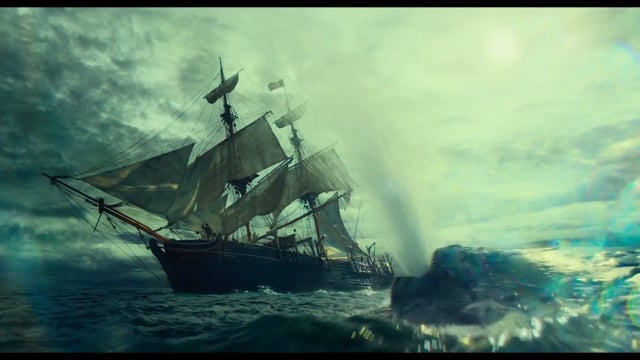
Ron Howard's account of the whaleship Essex, the story behind Moby-Dick, in stereo: water, rigging, low light and a starvation sequence felt in the textures of skin and muscle.
What it was
Ron Howard and cinematographer Anthony Dod Mantle gave the film a stylised look drawn from the impressionist painters of the period. That put the stereo inside a stylistic constraint while the story demanded that the audience feel the terror and majesty of the open ocean. Chris Parks led the 3D creative, treating the shape of the ocean almost as another character, the swell underneath every move the cast made.
Midway through the film the survivors are stranded and starving. Stereo was used to make that physical: the textures of skin, hair and muscle, seen in depth. At the other end of the scale, the scale and behaviour of the great waves were explored in depth so that the detail of life at sea was shown as it had not been before.
Technical approach
Some of the hardest material there is for stereo: water effects, the intricate rigging of the ships and long sequences in low light. Stereo supervision by Chris Parks with additional stereography by Angus Cameron; stereo production based out of Vision3.
On camera
15:47
interview
Adam May, Jim Chabin
Jim Chabin asks Adam about In the Heart of the Sea, and about Pan, Gravity and Edge of Tomorrow before it.
 3:13
featurette
Chris Parks, Ron Howard
How the depth was built to serve Ron Howard’s picture of the sea.
In their words
Stills
Related


